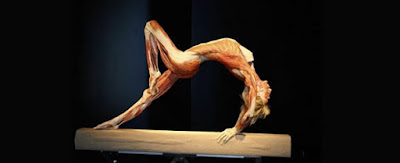
Niiler, Eric. "Mind-Controlled Prostheses Let Hands Feel Again : DNews." DNews. N.p., 8 Oct. 2014. Web. 29 Apr. 2017. Medical technology mixed with art is another version of the blending of science and art. Discussed in the lecture video, human dissection was a very frequent phenomenon going back to the era of the ancient egyptian's that fused anatomy with artistry. Direction allowed for knowledge and understanding bone structure and anatomical makeups that dissectionists had to be aware of when making their artistic incisions. Medical technology has progressed and is used everyday across the world in ways like: x-Rays, MRI's, and CT scans. The increase of use and progress in medical technology was a direct result of the increases progress and understanding if the human body, which is a form of art. Niiler, Eric. "Mind-Controlled Prostheses Let Hands Feel Again : DNews." DNews. N.p., 8 Oct. 2014. Casini, Silvia. "Magnetic Resonance Imag...
Professor Vesna's video lecture was very interesting to me because prior to taking an art class in highs school, I did not associate Math with Art. Professor Vesna stated math is the study of relationships between numbers and I never thought it could relate to art. Once I took the art class I realized just how much art and math are related and the necessity of math to create a simple piece of artwork. We use math for art all around the world today and can even trace is back thousands of years ago. I now realize how important it is to have correct measurements and spacing and direction of lines to make things realistic. http://img1-azcdn.newser.com/image/1062438-12-20160325131304.jpeg In the video Lecture Professor Vesna explains Leonardo Da Vinci's impact on art and his use of linear perspective to create realistic paintings. In "The Last Supper", Da Vinci uses linear perspective by making the vanishi...
I’m Aaliyah Jordan, a 1st year softball player from San Diego, California. I've grown up in in an environment of art and not science. My grandparents are very religious and have taught us to side more with Religion and not science. Growing up I bought into the idea of religion and never really questioned that because I trusted my grandparents and my family. I was very separated from science and never thought about it. Like humanities and science, my life has been very separated from softball and school. I've played softball since I was 4 years old and it's always been school on the weekdays and softball on the weekends. The two never really conflicted with each other or influenced one another because they were two separate aspects of my life and I never saw them as the same. Once I got to UCLA that changed dramatically for both seeing the split between humanities and science and also seeing them together. Bruin Walk North and South campus map of UCLA ...


Comments
Post a Comment